The Periodontists Logo Colour final
The Periodontists Logo Colour final white

Frenectomy

Want an appointment?

Understanding the Frenum and Its Impact on Oral Health

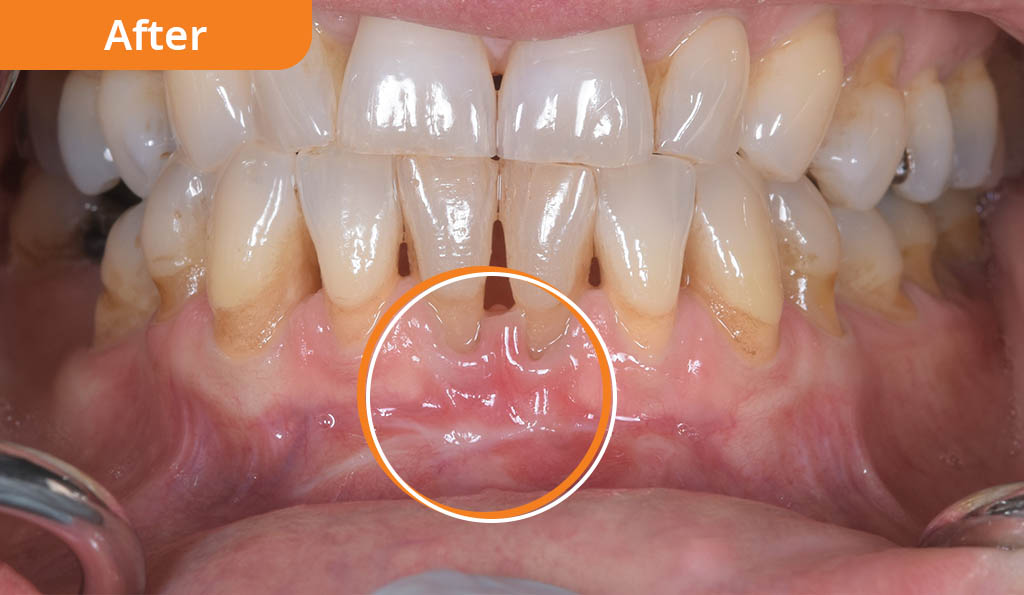
A frenum is a small band of soft tissue that connects the lips or tongue to the gums. In some cases, this tissue can pull on the gums, make cleaning difficult or contribute to gum recession. A frenectomy is a minor surgical procedure performed to remove or loosen the frenulum to reduce tension and protect gum health.

In the upper lip region, an enlarged or low-attached frenum can also contribute to a midline gap between the front teeth, called a diastema. Orthodontists often recommend removing this tissue either before or after orthodontic treatment to help prevent the gap from reopening.

DSC08798 resize

The Frenectomy Procedure

DSC08861 1

A frenectomy is a straightforward procedure designed to release or remove the frenum. Depending on the case, the periodontist may make a small incision or use a laser to free the tissue. After the release, dissolvable stitches are placed to secure the area and guide healing. The entire procedure typically takes 20 to 30 minutes, and stitches usually dissolve within two to three weeks.

This treatment is quick, predictable and performed under local anaesthesia, making it comfortable for both children and adults.

Crown Lengthening

Crown lengthening is a dental procedure that reshapes the gum tissue, and sometimes the underlying bone, to expose more of a tooth’s surface. It is a procedure that increases the amount of visible tooth structure.

Purpose:
This procedure can be performed for restorative purposes, to prepare a tooth for a crown, or for cosmetic reasons, to improve the appearance of a ‘gummy smile’.

Restorative purposes:
When a tooth is fractured or decayed below the gum line, crown lengthening creates enough space for a proper restoration, such as a crown. It ensures there is sufficient tooth structure for a secure and stable restoration.

Cosmetic Concerns:
‘Gummy smile’ correction: If excessive gum tissue covers the teeth, crown lengthening can create a more balanced and aesthetically pleasing smile. It can also correct asymmetries in the gum line, resulting in a more harmonious appearance.

Before and After

Mandibular (lower) Frenectomy
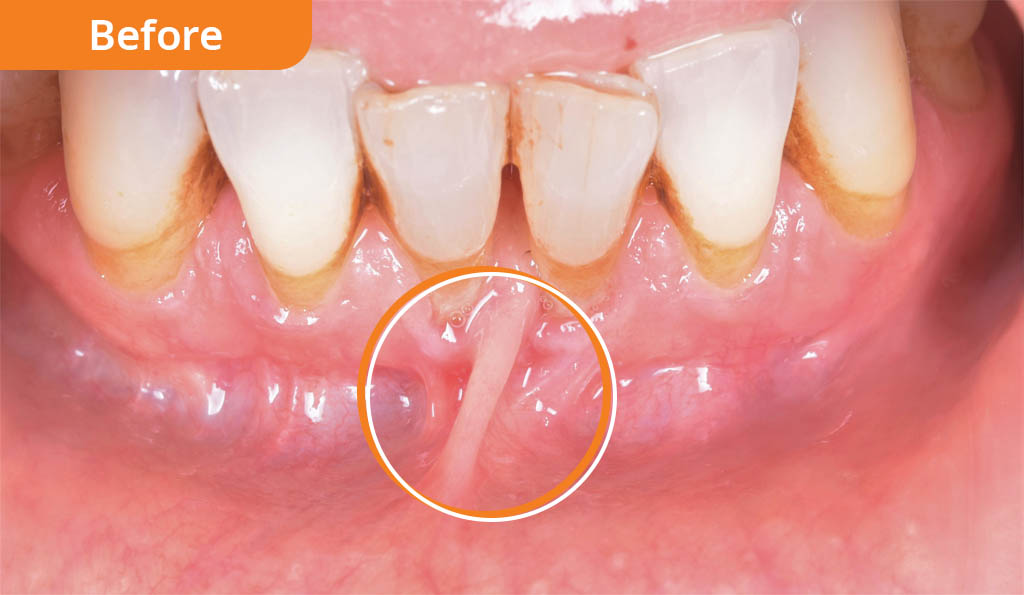
Patient 1 before
Patient 1 after

Related Services

Surgical Exposure of Hidden Teeth​

Pre-orthodontic Periodontal Assessment, Aftercare and Follow-up

Patients Going Through Orthodontic Treatment

FAQs

The frenum is a soft tissue band connecting the lips or tongue to the gums. When it places too much tension on the gums or affects oral function, it may lead to recession, difficulty cleaning or spacing issues. A frenectomy can relieve this tension and support better oral health.

A frenectomy is a minor surgical procedure where the frenum is loosened or removed. This is achieved using a small incision or laser, followed by dissolvable stitches. The aim is to reduce strain on the gums and improve function or aesthetics.

A thick upper frenum can cause a gap between the front teeth, known as a diastema. Removing this tissue with a frenectomy helps stabilise orthodontic results and reduces the likelihood of the gap reappearing.

The procedure is quick and low discomfort. Local anaesthesia is used to ensure comfort, and most patients report only mild soreness afterward. Healing is generally fast and uncomplicated.

Children, teens and adults may be recommended a frenectomy if they have gum pulling, spacing concerns, speech issues or difficulty maintaining oral hygiene due to frenum tension. Orthodontists often request the procedure to support treatment outcomes.

Scroll to Top