Gum Grafting
Want an appointment?
Want an appointment?
Periodontal Plastic Surgery
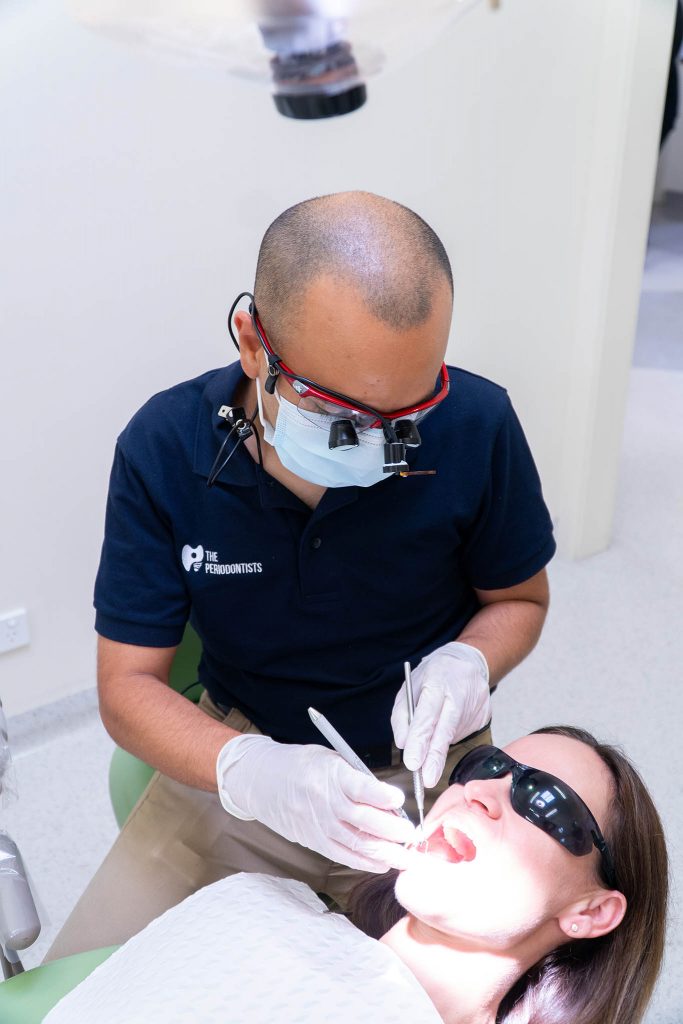
If you are after a gum graft, do not look any further as we are the practice for gum grafts in Perth. Our periodontist is very experienced in gum grafting procedures, and our practice has been providing them with excellent results for over twenty years. Gum grafts are procedures that aim at either replacing the missing gum tissues after gum recession (root coverage), or thickening the present gum tissues, or both.
Frequently Asked Questions!
Pain intensity will depend on the patient’s pain threshold and many other variables which can be discussed at your initial periodontal consultation. Pain will vary from patient to patient. Generally, Nurofen (ibuprofen) and Panadol (paracetamol) are sufficient to manage the pain experienced after gum grafting. These are over-the-counter medications and do not require a script. However, we usually give you a script for stronger painkillers in case Nurofen and Panadol are not enough.
Typically it takes three weeks of initial healing for a gum graft to look ‘normal’. This means that the gum graft takes around three weeks to look very close to its final result. After this, healing will continue for approximately four months. However, during this time you won’t really notice any more visual changes. We will see you for a follow-up appointment seven to ten days after your surgery to review your healing. This will be followed by a three week review, and then a six week review to follow up the healing progress.
This depends on many factors, and unfortunately, there are no easy answers to this one. If the question is whether “gum growth” is possible or could be achieved, then the answer is YES. However, this does not mean that it could be achieved equally in all cases. The gums and level of root coverage, what people refer to as “growth”, will be assessed during the initial periodontal consultation.
If the aim of gum grafting is to have gums grow to cover the tooth further, then this will be achieved. However, please be mindful that sometimes, gum grafting is done with no “gum growth” in mind. In that case, the aim of gum grafting is to make the gums thicker. This helps with reducing the potential of gum recession (gum shrinking) and helps with keeping that area clean. If this is deemed necessary, then “gum growth” may not be achieved. Again, this will be discussed very clearly during the initial periodontal assessment and consultation.
All our periodontal procedures are provided with a harmonious successful outcome in mind. However, like any other medical intervention, a gum graft can fail. If the gum graft is completed appropriately, and our verbal and written post-operative instructions are followed at home, then the gum graft is unlikely to fail. In our experience, we have seen a minimal failure rate.
For the first week immediately after a gum graft, you must avoid eating hard, crunchy foods. We recommend soft foods. This does not necessarily mean smoothies and mashed potatoes only. It can be rice, pasta, fish and chicken. These foods are soft enough to not cause any damage to the grafted site. After the first week, you can return to your usual diet, and as always, we are a phone call or email away if you have any queries.
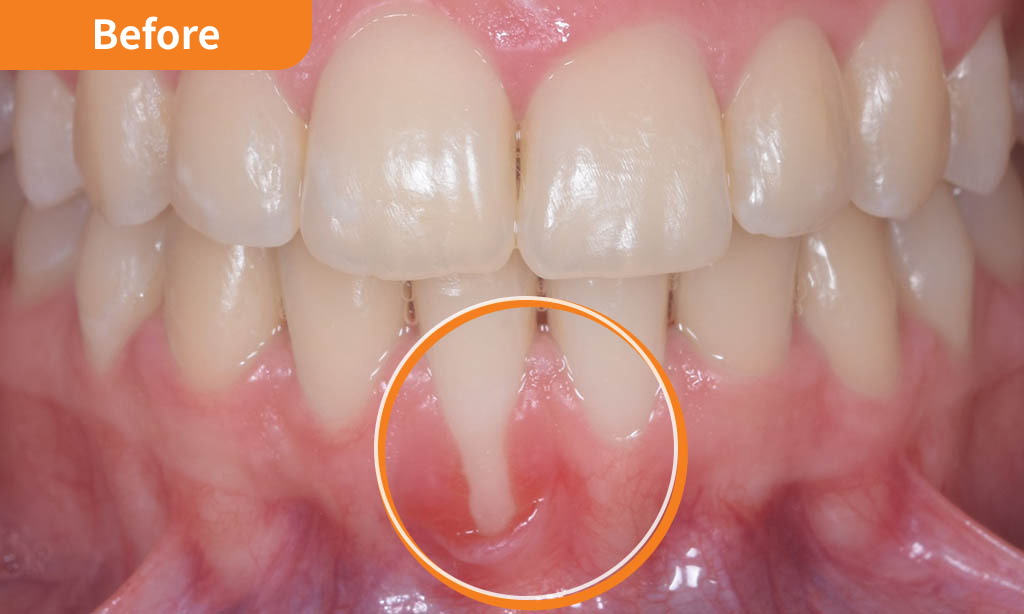
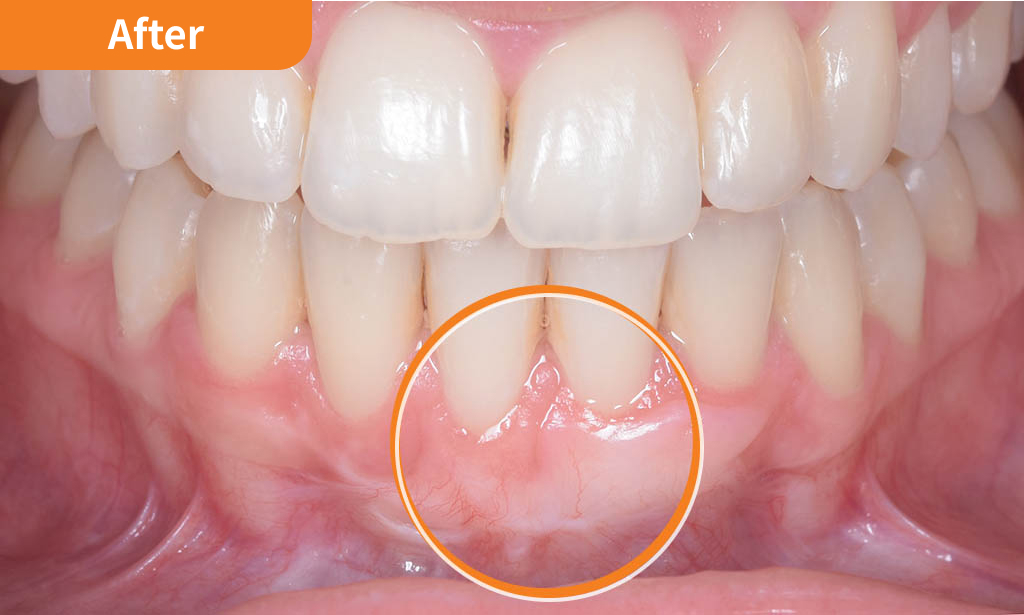
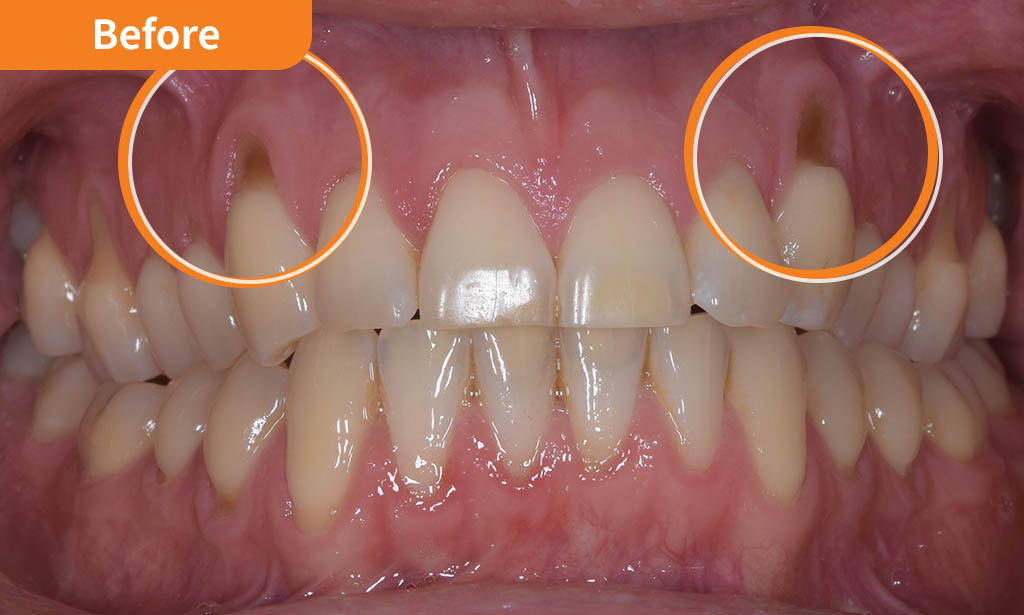
Before and After
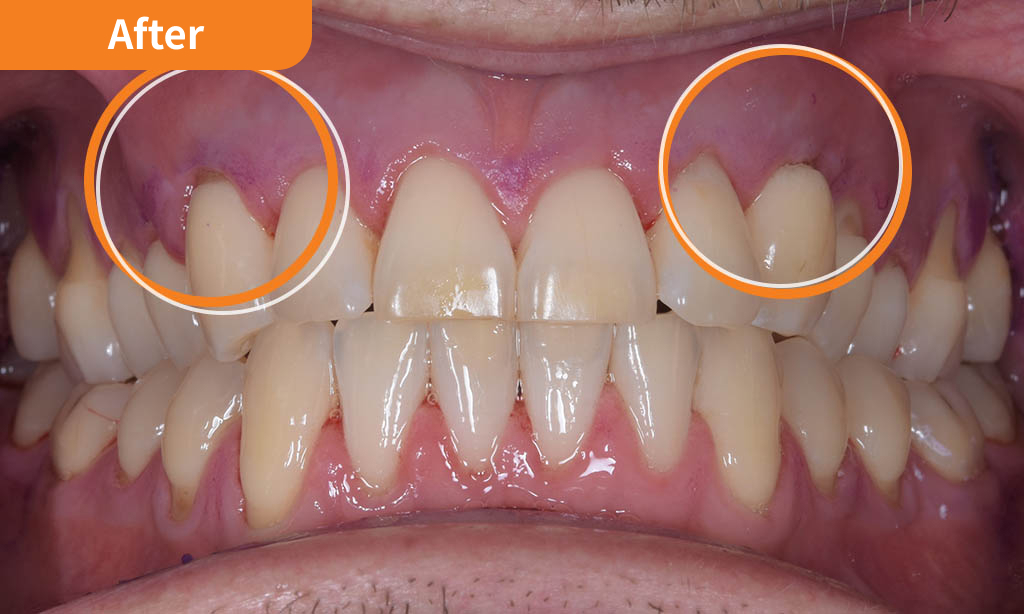
Connective Tissue Graft On The Upper Canines
Full Thickness Graft On The Lower Central Incisor